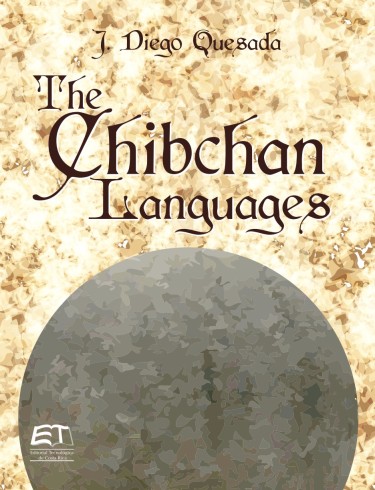
The Chibchan Languages
J. Diego Quesada Pacheco
Editorial Tecnológica de Costa Rica
Sinopsis
The Chibchan language family is one of the most intriguing language groups in the Americas, spanning from Honduras in Central America to the eastern Colombian highlands and the Colombian-Venezuelan border region. This book provides a detailed description and analysis of the Chibchan languages, emphasizing their typological diversity, grammatical features, and historical context.
The work highlights the family's role as a linguistic prototype of the Central American-Colombian Area, part of the broader Intermediate Area characterized by unique cultural and linguistic traits. It addresses phonology, morphology, syntax, and discourse structures, focusing on the distinction between Central American and Colombian languages within the family.
Key topics include ergativity, participant highlighting through information-structure markers, and intermittent marking of grammatical categories. The study reveals a high degree of discourse permeability and fluid syntax across the family. The book also includes sample texts, detailed analyses of grammatical relations, and discussions on the evolution of linguistic features.
Directed at linguists and specialists in Amerindian languages, the book offers significant insights into Chibchan languages’ classification, morphosyntax, and areal relationships, shedding light on their development and contribution to historical linguistics and typological theory.
Contenido
- Preface — p. 11
- Acknowledgements — p. 13
- Abbreviations — p. 15
- The Chibchan Languages in Areal Perspective — p. 17
- 1.1 Areal linguistics — p. 18
- 1.2 The Intermediate Area — p. 22
- 1.3 The Chibchan languages — p. 31
- 1.3.1 Geographic and historical aspects of the Chibchan peoples — p. 33
- 1.3.2 Problems in the study of Chibchan: a ghost named Macro-Chibchan — p. 40
- 1.4 Structure and scope of the book — p. 44
- The Languages of Central America — p. 49
- 2.1 Phonology — p. 49
- 2.1.1 Vowels — p. 49
- 2.1.2 Consonants — p. 50
- 2.1.3 Tone — p. 53
- 2.1.4 Phonological processes — p. 54
- 2.2 Morphology — p. 55
- 2.2.1 Nouns and nominal morphology — p. 55
- 2.2.1.1 Pronouns — p. 55
- 2.2.1.2 Numeral classifiers and number — p. 59
- 2.2.1.3 Demonstratives — p. 63
- 2.2.1.4 Possessive markers — p. 64
- 2.2.1.5 Case markers — p. 64
- 2.2.1.6 Markers of information-structure status — p. 66
- 2.2.1.7 Anaphoric reference — p. 67
- 2.2.2 Verbs and verbal morphology — p. 68
- 2.2.2.1 Tense, aspect, mood — p. 68
- 2.2.2.2 Positionals — p. 70
- 2.2.2.3 Person — p. 71
- 2.2.2.4 Voice — p. 72
- 2.2.3 Other word classes — p. 75
- 2.2.3.1 Adjectives and adverbs — p. 75
- 2.2.3.2 Adpositions and particles — p. 75
- 2.3 Syntax — p. 78
- 2.3.1 Word order — p. 78
- 2.3.1.1 The main clause — p. 78
- 2.3.1.2 The noun phrase — p. 79
- 2.3.1.3 The verb phrase — p. 82
- 2.3.2 Grammatical relations — p. 86
- 2.3.2.1 Accusative systems — p. 86
- 2.3.2.2 Ergative systems — p. 90
- 2.3.2.3 Active/non-active systems — p. 92
- 2.3.3 Valency and syntactic operations — p. 93
- 2.3.4 Comparison — p. 97
- 2.4 Sample texts — p. 97
- 2.4.1 Teribe — p. 98
- 2.4.2 Bribri — p. 104
- 2.4.3 Bocotá — p. 108
- The Languages of Colombia and Venezuela — p. 115
- 3.1 Phonology — p. 115
- 3.1.1 Vowels — p. 115
- 3.1.2 Consonants — p. 116
- 3.1.3 Suprasegmental phonology — p. 118
- 3.1.4 Phonological processes — p. 119
- 3.2 Morphology — p. 120
- 3.2.1 Nouns and nominal morphology — p. 121
- 3.2.1.1 Pronouns — p. 122
- 3.2.1.2 Noun classifiers — p. 124
- 3.2.1.3 Demonstratives — p. 125
- 3.2.1.4 Number and other determiners — p. 125
- 3.2.1.5 Case markers — p. 128
- 3.2.1.6 Markers of information-structure status — p. 130
- 3.2.2 Verbs and verbal morphology — p. 131
- 3.2.2.1 Tense, aspect, mood, and evidentials — p. 133
- 3.2.2.2 Person and number — p. 135
- 3.2.2.3 Polarity — p. 137
- 3.2.2.4 Clause-connectors — p. 138
- 3.2.2.5 Voice — p. 139
- 3.2.3 Other word classes — p. 142
- 3.2.2.1 Adjectives and adverbs — p. 142
- 3.2.3.2 Adpositions and particles — p. 143
- 3.3 Syntax — p. 144
- 3.3.1 Word order — p. 144
- 3.3.1.1 The main clause — p. 144
- 3.3.1.2 The noun phrase — p. 145
- 3.3.1.3 The verb phrase — p. 148
- 3.3.2 Grammatical relations — p. 149
- 3.3.2.1 Accusative systems — p. 149
- 3.3.2.2 Ergative systems — p. 150
- 3.3.3 Valency and syntactic operations — p. 151
- 3.3.4 Comparison — p. 153
- 3.4 Sample texts — p. 153
- 3.4.1 Damana — p. 154
- 3.4.2 Tunebo — p. 157
- 3.4.3 Barí — p. 164
- Relevant Topicsin Chibchan Linguistics — p. 169
- 4.1 Ergativity — p. 170
- 4.1.1 Mayan-style ergativity: Guatuso — p. 171
- 4.1.1.1 Reflexives and reciprocals — p. 174
- 4.1.1.2 Antipassive — p. 175
- 4.1.2 Discourse-run ergativity: The Viceita languages — p. 177
- 4.1.2.1 Splits — p. 178
- 4.1.2.2 Voice — p. 180
- 4.1.2.3 Discourse-triggered intermittent ergative marking — p. 182
- 4.1.3 Intra-clausal ergativity: The Magdalenian languages and Guaymí — p. 186
- 4.1.4 Summary — p. 192
- 4.2 Participant-highlighting — p. 194
- 4.2.1 Definition — p. 194
- 4.2.2 Strategies — p. 195
- 4.2.2.1 Word order — p. 195
- 4.2.2.2 Voice systems — p. 195
- 4.2.2.3 Focus systems — p. 196
- 4.2.3 The channel focus > topic > subject: the Boruca case — p. 203
- 4.2.3.1 Subject, word order and participant-highlighting — p. 203
- 4.2.3.2 The interaction of the Boruca information-structure markers — p. 214
- 4.2.3.3 The informational route to subject-coding — p. 219
- 4.3 Intermittent marking — p. 223
- 4.3.1 Number — p. 225
- 4.3.2 Case — p. 226
- 4.3.2.1 Teribe obviative — p. 226
- 4.3.2.2 Viceita ergative — p. 227
- 4.3.3 Information-structure — p. 227
- 4.3.4 Summary — p. 228
- Concluding remarks — p. 235
- References — p. 247
Materias
Palabras clave
BISAC
- LAN009000. ARTES DEL LENGUAJE Y DISCIPLINAS > Lingüística > General
Thema
- CFL. Paleografía
- 1KLC. México y Centroamérica
- 2JS. Lenguas indígenas de América del Sur y el Caribe
Dewey
- 499. Idioma > Otros idiomas > Otros idiomas
Más de Editorial Tecnológica de Costa Rica
Ver todas