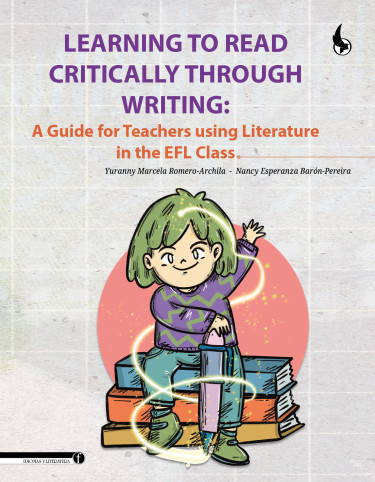
Learning to Read Critically through Writing:
A guide for Teachers using Literature in the EFL Class
Yuranny Marcela Romero-Archila · Nancy Esperanza Barón-Pereira
Editorial UPTC
Sinopsis
In contemporary education, fostering critical reading has become crucial as it encourages reflective processes where students construct and articulate their own perspectives in dialogue with those from others. Accordingly, this book aims to provide EFL teachers with a set of strategies, activities, and worksheets, systematically grounded in theory to support their practice. The guided comprehension model, a teaching framework proposed by McLaughlin & Allen (2009), was adopted to provide a clear structure for teaching reading strategies through five progressive stages: explain, demonstrate, guide, practice, and reflect. The book is organized into five units, each focusing on a reading strategy: summarizing and paraphrasing, distinguishing facts from opinions, questioning, juxtaposing ideas, and examining personal responses. Each unit comprises three lessons, structured through worksheets: an introductory lesson, a lesson for guided instruction and review, and a final lesson focused on practice. After completing the lessons, students are allowed to evaluate their progress through formative assessment activities. Finally, the worksheets provide a space for self-reflection, where students can write entries in their reflective journals. These entries encourage them to examine what they have learned regarding both the strategy and the content, reflect on their emotional responses during the lessons, identify strengths and challenges, and propose actions for further learning development.
This book contributes to the field of English language teaching as it engages with children’s literature, articulating theory and practice with the aim of supporting your students’ process of becoming more critical and reflective readers.
Sobre los autores

Yuranny Marcela Romero-Archila
Professor at Universidad Pedagógica y Tecnológica de Colombia (UPTC) in Tunja. She holds an M.A. in Languages Teaching from UPTC and an M.A. in Foreign Language Teaching for Self-Directed Learning from Unisabana. She is the leader of the research group J.O.I.E. She currently teaches at the B.A. in Foreign Languages. She has worked as a teacher for more than 17 years. Her research interests are on Children’s literature, MALL and rural education.

Nancy Esperanza Barón-Pereira
Professor at Universidad Pedagógica y Tecnológica de Colombia (UPTC) in Tunja. She holds an M.A. in Languages Teaching from UPTC and a Diploma in Literature and Semiotics from UPTC. She had an internship in English and Culture in the USA and Canada with MEN and ICETEX. She belongs to the research group J.O.I.E. She currently teaches at the B.A. in Foreign Languages. Her research interests are on Children’s literature and Social Critical Perspective in ELT.
Contenido
Introduction.....................................................................................................................17
Justification.....................................................................................................................21
Book Structure................................................................................................................22
Unit One
Summarizing and Paraphrasing....................................................................................27
Theoretical and Rationale Foundations of the Strategy..........................................27
Lesson 1: What is the Difference?..............................................................................29
Explain and Demonstrate Stages .............................................................................29
Worksheet #1: Summarizing..................................................................................31
Worksheet #2: Paraphrasing.................................................................................................32
Lesson Two: Hands on the Text................................................................................33
Guide Stage ...............................................................................................................33
Worksheet #3-A: Paraphrasing Quotes................................................................35
Worksheet #3-B: Summarizing Texts ..................................................................36
Lesson Three: Time to Practice.................................................................................37
Practice Stage.............................................................................................................37
Worksheet #4: Time to Practice.......................................................................... 38
Unit Assessment........................................................................................................39
Reflection...................................................................................................................39
Summarizing and Paraphrasing Peer-assessment Rubric..................................40
Unit Two
Facts or Opinions............................................................................................................41
Theoretical and Rationale Foundations of the Strategy..........................................41
Lesson 1: Distinguishing Facts and Opinions............................................................43
Explain and Demonstrate Stages ...........................................................................43
Worksheet #5: Hamilton Facts and Opinions .....................................................45
Lesson 2: What is my Opinion?46
Guide Stage ..............................................................................................................46
Worksheet #6: J.K. Rowling Facts and Opinions ................................................47
Lesson 3: Fact or Opinion?........................................................................................49
Practice Stage............................................................................................................49
Worksheet #7-A: Dr. Seuss Facts and Opinions .................................................51
Worksheet #7-B: Roald Dahl Facts and Opinions ...............................................52
Worksheet #8: The Facts and Opinions Honeycomb......................................... 53
Unit Assessment ....................................................................................................54
Reflection ................................................................................................................54
Facts and Opinions Self-assessment Checklist ........................................................55
Unit Three
Questioning....................................................................................................................57
Theoretical and Rationale Foundations of the Strategy..........................................57
Lesson 1: Raising Awareness.....................................................................................59
Explain and Demonstrate Stages ............................................................................59
Worksheet #9: Time for Questioning.............................................................................61
Lesson 2: Beyond Literal Questions...................................................................63
Guide Stage................................................................................................................63
Worksheet #10-A: Author and Me........................................................................65
Worksheet #10-B: On my Own ............................................................................66
Lesson 3: Asking and Answering Questions..................................................................67
Practice Stage............................................................................................................67
Worksheet #11-A: Question Creation Chart – QC................................................69
Worksheet #11-B: Response Creation Chart .....................................................70
Unit Assessment.........................................................................................................71
Reflection Juxtaposing .............................................................................................71
Unit 3 Questioning Self-assessment Checklist.....................................................72
Unit Four
Juxtaposing.....................................................................................................................73
Theoretical and Rationale Foundations of the Strategy..........................................73
Lesson 1: Moving Beyond the Obvious.....................................................................75
Explain and Demonstrate Stages ............................................................................75
Worksheet #12: Fractured Fairytales....................................................................77
Lesson 2: Juxtaposing Non-fiction Texts..................................................................79
Guide Stage ...............................................................................................................79
Worksheet #13: Which Version do you Believe?...................................................81
Lesson 3: Connecting with Your Knowledge...........................................................86
Practice Stage .........................................................................................................86
Worksheet #14: Discussing and Connecting Knowledge....................................88
Unit Assessment.........................................................................................................91
Reflection .................................................................................................................91
Unit Four Juxtaposing Peer-assessment..............................................................92
Unit Five
Examining Personal Responses...............................................................................93
Theoretical and Rationale Foundations of the Strategy .........................................93
Lesson 1: Reading the World as a Path to Self-Reflection.......................................96
Worksheet #15: Reflecting on my Feelings..........................................................98
Lesson 2: My Thoughts and Feelings......................................................................100
Guide Stage .............................................................................................................100
Worksheet #16: Where My Feelings and Thoughts Meet .................................101
Lesson 3: Are There Viable Solutions?.....................................................................103
Practice Stage .........................................................................................................103
Worksheet # 17: Linking my Life and the World Through Social Action...........104
Reflection ...............................................................................................................106
Unit 5 Examining Personal Responses Self-assessment Checklist....................107
References.....................................................................................................................109
Authors’ Biodata............................................................................................................117
Materias
Palabras clave
BISAC
- EDU000000. EDUCACIÓN > General
Thema
- CJ. Enseñanza y aprendizaje de lenguas
Dewey
- 370. Sociología y Antropología > Educación > Educación